Previously, I explained that the reason the United States was able to become the victor of the 20th century was because Christians valued human beings. While communism and fascism judged people based on whether they were useful or not—and disposed of or even killed those deemed useless—in the United States, where Christians made up the majority, people were treated with care and respect. Like communism and fascism, capitalism also judges people based on whether they are useful or not. After World War II, Christianity in the United States lost its influence, and capitalism came to dominate the country. As a result, the United States is now on the verge of collapse. So what exactly lies behind this development? In this section, I will explain that background.
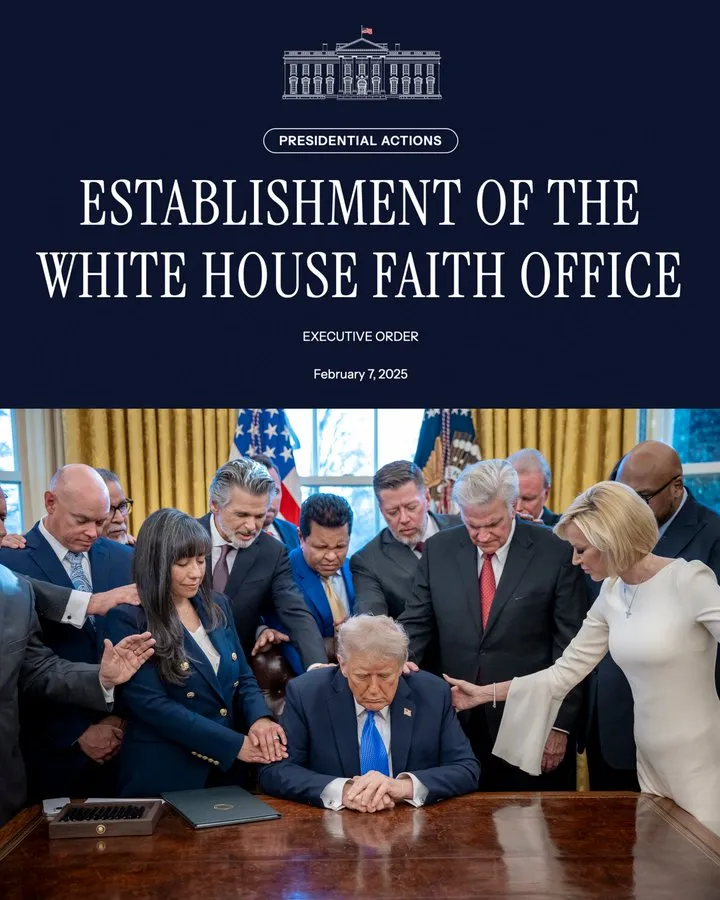
It is said that the most important support base for the current U.S. president, Donald Trump, is evangelical Christians. Of the 74 million votes that Trump received, approximately 25 to 30 million—roughly 30–40%—came from evangelical Christians. Evangelicals make up about 20% of the U.S. population, and given their strong cohesion and high voter turnout, they represent one of the largest political blocs in the United States. As the United States currently dominates the world, it is extremely important to understand who these evangelical Christians are. However, at least in Japan, very few people can clearly explain who they are. Those who have some familiarity with the United States may have the image that evangelicals are fundamentalist Christians who faithfully follow the teachings of the Bible. However, that image is more than half a century old. After World War II, a major wave swept through the American Christian world. This wave was extraordinarily powerful and transformed American Christianity into something that can no longer truly be called Christianity.
To roughly understand what evangelical Christians are like, one can look up the English term “televangelist.” In English, “television evangelist” is “televangelist,” and “evangelical” is “evangelist.” In other words, the term “televangelist” is a combination of “television” and “evangelical.” According to Wikipedia:
Televangelism is the utilization of media platforms such as radio and television for the marketing of religious messages, particularly Christianity and especially Evangelical Christianity.
Those who listen to televangelism are not necessarily evangelicals. However, from the advent of television until the emergence of YouTube, television had overwhelming influence. Pastor Paula White, who personally advises President Trump, is also a televangelist. Trump saw her on television and made personal contact with her. As an easy-to-understand example of televangelism, consider a scene from the 1987 film Repo Man:
Reverend Larry on the TV: The lord has told me personally. Yay for I walk with the lord, Amen. He said Larry you and your flock shall seek the promised land. But only if you first destroy the twin evils of godless communism abroad and liberal humanism at home. Oh joy and Hallelujah smash'em down. Now my friends. Occasionally we get a letter from a viewer that says now the only reason Reverend Larry comes on your television set is because he wants your money. And do you know what? They're right! I do want your money. Because god wants your money. So I want you to go out and mortgage that home and sell that car and send me your money. You don't need that car.
Although Repo Man is a film from 40 years ago, the basic message has not changed much even today. The messages of televangelism are: “Send money,” “Communism is the enemy,” and “Liberals are the enemy.” So what does Pastor Paula White say? Likewise: “Give money.”
“I want a hundred thousand dollars to come in. I want a hundred thousand dollars. There are people, there are ten people that could give ten thousand dollars. There's a hundred people that could give a thousand dollars. Get a check, make it payable to Paula White Ministry. There are people that are watching right now who say I don't have it, give a hundred dollars. Bring a, a sacrificial seed. This isn't for me, this is about kids. People die without you being obedient. This is about kids who are going to be minstrels and instruments and warriors and mighty for God. This is about kids who are going to make a difference. I'm going to take everybody's blessing, come on. I'm going to tell you, get a seed of sacrifice. Get in the arena, get in the arena. I need you to stand, there's only three envelopes. I'm not moving, I'm not going to lay hands on people until you're obedient. Get out of your seat, come on, and come bring up a seed. Come bring up a seed, come bring up a seed I'm doing it to break a mentality. I'm doing it to break something. You need a breakthrough. You need things, you need a building, come on. You need a wedding dress. You need some things, but you're struggling all the time financially. That's not the Kingdom of God. The Kingdom of God is not every wish, every want. But it is provision for the vision. The Kingdom of God, there is no lack in Christ. He will supply all your needs according to His riches and glory. The Kingdom of God, there are thirty people right now that can give a thousand dollars.”
At this point, various questions arise. Evangelical Christians are generally seen as low-income and less educated. Why, then, do evangelical pastors pressure poor believers to “send money”? And why do believers comply and transfer money as they are told? If you look at this page(→40 True Generosity Stories), you'll find many stories of people who, despite their financial difficulties, went to great lengths to make donations. Wire transfer fraud is a major problem in both Japan and the United States. The estimated annual loss in Japan is around 140 billion yen(a billion dollars), and in the United States, it's around 700 million dollars. The majority of victims are elderly people with weak resistance. The elderly are easily manipulated when pressured by others. Is what evangelical churches are doing truly religion? Or is it just a religion in name only, a wire transfer fraud that deceives poor believers? The answers to these questions can be found by examining the doctrine known as the "Prosperity Gospel." According to Wikipedia:
Prosperity theology (sometimes referred to as the prosperity gospel, the health and wealth gospel, the gospel of success, seed-faith gospel, Faith movement, or Word of Faith movement) is a belief among some Charismatic Protestants, originating in the United States, that financial blessing and physical well-being are always the will of God for them, and that faith, positive scriptural confession, and giving to charitable and religious causes will increase one's material wealth. Material and especially financial success is seen as evidence of divine grace or favor and blessings, and the opposite, that of judgment.
In Hinduism, there are gods who bring wealth. In Japanese Shinto, there are as well. In those religions, believers pray for prosperity. However, from a scientific perspective, praying to a god does not increase material goods or money. To increase material wealth, one must physically produce it. To increase money, one must learn about money. From a scientific standpoint, praying for economic success is a waste of time. However, people who lack philosophical education, who are poor yet devout, do not know this. If they are told, “You are poor because your faith is insufficient,” they accept it as truth. This is why evangelical believers cannot resist the pressure from pastors demanding money. Christ said that “it is easier for a camel to pass through the eye of a needle than for a rich man to enter heaven,” rejecting attachment to wealth. He also said, “Blessed are the poor,” affirming poverty. Beyond religious correctness, these teachings also led to the rejection of superstition. Westerners who believed in Christ did not waste time praying for prosperity, but instead devoted their time and energy to the development of philosophy and science. That development led to real economic prosperity, allowing Western civilization to achieve a higher level of development than other civilizations. Paradoxically, the way to achieve real wealth was not to desire wealth, but to reject attachment to it. Pastors of the prosperity gospel claim to be Christians. However, the prosperity gospel is not Christianity. It is a primitive form of folk belief that predates Christianity. Moreover, it calls itself Christianity despite not being so, and teaches unscientific falsehoods—making it, in effect, a form of fraud. Prosperity gospel pastors may say that “faith is freedom.” However, that idea of freedom emerged from Christianity, which is comparatively rational among religions. There is no need to extend such freedom to what amounts to fraudulent schemes carried out in the name of religion. The concept of freedom of religion must be reconsidered.
Because the prosperity gospel lacks a strict definition, it is difficult to measure statistically. However, according to a 2023 survey, 76% of American Christians believe in the prosperity gospel. A poll by Time magazine found that 61% believe that God wants people to prosper. It is fair to say that American Christianity has now been replaced by a primitive form of folk religion. The prosperity gospel emerged after World War II, and it effectively swept Christianity out of postwar America, allowing capitalism to come to dominate the country.
Add new comment